
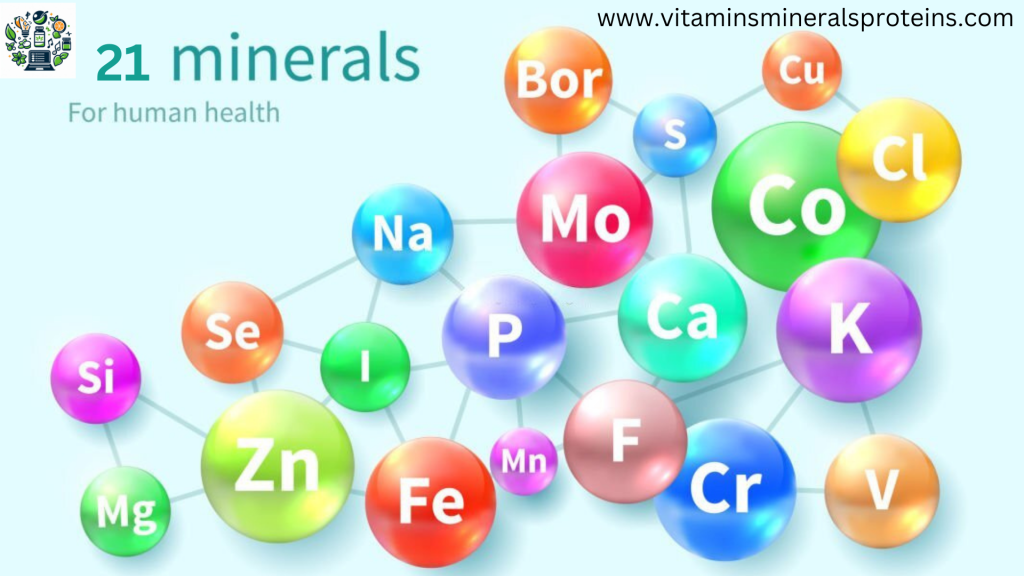
Your body must have access to minerals in order to operate effectively. They have a role in a variety of activities, including the development of strong bones, control of nerve and muscle activity, production of hormones and enzymes, and fluid homeostasis.
But what precisely are minerals? How many different kinds of minerals exist? What foods are mineral-rich? What occurs if you don’t have enough of them, too?
What are Minerals?
Minerals are inorganic substances that may be found in food and the soil. Minerals cannot be produced by living beings, in contrast to vitamins, which are chemical substances that may be generated by both plants and animals. They must be received from outside sources like plants, water, and soil.
According to how much your body need each mineral, there are two
categories: macrominerals and trace minerals.
You require macrominerals in quite high doses, often greater than 100 milligrams per day. They consist of sulfur, calcium, phosphorus, magnesium, sodium, and potassium.
Macrominerals are those that you need in relatively large amounts, usually more than 100 milligrams per day. They include calcium, phosphorus, magnesium, sodium, potassium, chloride, and sulfur.
Trace minerals are those that you need in smaller amounts, usually less than 20 milligrams per day. They include iron, zinc, copper, selenium, iodine, manganese, fluoride, cobalt, and molybdenum.
Each mineral has a specific function and role in your body. Some of them work together to perform certain tasks, while others compete with each other for absorption and utilization. Therefore, it is important to have a balanced intake of different minerals to avoid deficiencies or excesses.
What are the Functions of Minerals?
Here are some of the main functions of minerals in your body:
– Calcium: Helps blood clotting, muscle contraction, nerve function, and bone and teeth formation.
– Phosphorus: Works with calcium to form bone and teeth structure, helps energy metabolism and acid-base balance.
– Magnesium: Supports muscle and nerve function, enzyme activity, blood pressure regulation, and blood sugar control.
– Sodium: Maintains fluid balance, blood pressure, nerve transmission, and muscle contraction.
– Potassium: Regulates fluid balance, blood pressure, nerve transmission, and muscle contraction.
– Chloride: Balances fluids and electrolytes, aids digestion by forming stomach acid.
– Sulfur: Forms part of amino acids (the building blocks of proteins), helps detoxification and antioxidant production.
– Iron: Transports oxygen in red blood cells, supports immune function and energy production.
– Zinc: Supports immune function, wound healing, growth and development, taste and smell perception, and enzyme activity.
– Copper: Helps iron metabolism, red blood cell formation, connective tissue formation, nerve function, and antioxidant defense.
– Selenium: Protects cells from oxidative damage, supports thyroid function and immune system.
– Iodine: Synthesizes thyroid hormones that regulate metabolism, growth and development.
– Manganese: Helps bone formation, carbohydrate metabolism, antioxidant defense, and enzyme activity.
– Fluoride: Strengthens tooth enamel, prevents dental cavities, and supports bone health.
– Cobalt: Forms part of vitamin B12, which is essential for red blood cell production, nerve function, and DNA synthesis.
– Molybdenum: Helps break down certain amino acids, sulfur compounds, and drugs.
What are the Sources of Minerals?
You can get minerals from a variety of foods, but some foods are especially rich in certain minerals.
Here are some examples of foods that provide good sources of minerals:
– Calcium: Dairy products (milk, cheese, yogurt),dark green leafy vegetables (kale, spinach, broccoli), almonds, tofu, canned fish (sardines, salmon), fortified cereals and juices.
– Phosphorus: Meat, poultry, fish, eggs, dairy products, nuts, seeds, legumes (beans, peas), whole grains.
– Magnesium: Nuts, seeds, legumes, dark chocolate, green leafy vegetables, bananas, avocados, whole grains.
– Sodium: Table salt, processed foods (canned soups, frozen meals, snacks), cheese, pickles, olives, soy sauce.
– Potassium: Fruits (bananas, oranges, melons), vegetables (potatoes, tomatoes, sweet potatoes), legumes, nuts, seeds, dairy products.
– Chloride: Table salt, sea salt, soy sauce, processed foods.
– Sulfur: Protein-rich foods (meat, poultry, fish, eggs), garlic, onions, cruciferous vegetables (broccoli, cauliflower, cabbage),dried fruits.
– Iron: Meat, poultry, fish, organ meats, fortified cereals, legumes, dark green leafy vegetables, dried fruits, nuts, seeds.
– Zinc: Oysters, shellfish, meat, poultry, fish, eggs, dairy products, legumes, nuts, seeds, whole grains.
– Copper: Shellfish, organ meats, nuts, seeds, legumes, dried fruits, dark chocolate.
– Selenium: Brazil nuts, seafood, meat, poultry, eggs, dairy products, whole grains.
– Iodine: Seafood, seaweed, iodized salt, dairy products, eggs.
– Manganese: Nuts, seeds, legumes, whole grains, pineapple, tea.
– Fluoride: Fluoridated water, seafood, tea, grape juice.
– Cobalt: Animal products (meat, poultry, fish, eggs, dairy products), fortified cereals.
– Molybdenum: Legumes,nuts, seeds, grains, milk.
How Much Minerals Do You Need?
Your needs for minerals are influenced by your age, sex, health, and degree of exercise. The Dietary Reference Intakes (DRIs), which are based on the best available scientific data, offer acceptable intakes (AIs) or recommended daily amounts (RDAs) for each mineral.
Tolerable upper intake levels (ULs), which are the highest quantities that are unlikely to have a negative impact on most people’s health, are also provided for several minerals by the DRIs.You can find the DRIs for minerals on the website of the National Institutes of Health (NIH).
Although they may not apply to everyone, keep in mind that they are general recommendations. Depending on their unique requirements and medical situations, some people may require more or less mineral supplementation. For instance, various mineral needs may apply to pregnant and breastfeeding women, vegetarians and vegans, athletes, and persons with certain disorders.
Therefore, it is best to consult your doctor or a registered dietitian before taking any mineral supplements or making significant changes to your diet.
What are the Signs of Mineral Deficiency or Excess?
Mineral deficiency or excess can cause various symptoms and health problems. Some of the common signs of mineral imbalance are:
– Fatigue
– Weakness
– Muscle cramps
– Irregular heartbeat
– Numbness or tingling
– Confusion
– Mood changes
– Hair loss
– Brittle nails
– Skin problems
– Poor wound healing
– Anemia
– Infections
– Bleeding gums
– Bone loss
– Dental cavities
– Growth retardation
– Thyroid problems
If you experience any of these symptoms, you should see your doctor for a proper diagnosis and treatment. A blood test can help determine your mineral levels and identify any deficiencies or excesses.
How to Prevent Mineral Deficiency or Excess?
The best way to prevent mineral deficiency or excess is to eat a balanced and varied diet that includes a variety of foods from all food groups. This will ensure that you get enough of all the minerals you need, as well as other nutrients, such as vitamins, fiber, antioxidants, and phytochemicals.
Additionally, since processed foods, extra sweets, salt, and alcohol can hinder the absorption and utilization of minerals, you should restrict your intake of these items. In addition, you should drink a lot of water to keep hydrated since it helps your body transport minerals and maintain fluid equilibrium.
In some cases, you may need to take mineral supplements to correct a deficiency or meet increased needs. However, you should not take supplements without consulting your doctor first, as some minerals can interact with medications or cause toxicity if taken in excess.
Conclusion
Minerals are vital for your health and well-being. They carry out numerous roles in your body and backing different cycles. You can get minerals from a great many food varieties, yet a few food sources are especially plentiful in specific minerals. You ought to expect to eat a decent and fluctuated diet that gives satisfactory measures of the multitude of minerals you really want. On the off chance that you have any worries about your mineral admission or status, you ought to converse with your primary care physician or an enlisted dietitian for exhortation and direction.
References:
- National Institutes of Health (NIH): Office of Dietary Supplements. Dietary Reference Intakes (DRIs). https://ods.od.nih.gov/HealthInformation/nutrientrecommendations.aspx
- Academy of Nutrition and Dietetics. Minerals. https://www.eatright.org/health/essential-nutrients/minerals
- World Health Organization. Minerals and trace elements. https://www.who.int/publications-detail-redirect/9241561734
 VITAMINPRO
Leave a comment